So for now until I hear anything back from the competition I’ve entered, I guess I will internally squirm. But is that just the life of an artist? Having to get used to waiting to hear back? I guess I might as well get used to the feeling!
My course has finished and I went to the meet-up they held at the National Theatre. Of course I wasn’t the only one! It was a meet-up for everyone associated with The Golden Egg Academy, including lots of people from other courses they run and members of their club. There were a number of staff and lots of people. After talking a lot about writing and having lunch with some, I have joined the club! The Golden Egg club allows you to join a Facebook group where you are able to watch children’s author, agent and publisher interviews that Golden Egg run regularly, as well as giving you access to all previous content. I can’t pinpoint exactly what I’m learning as I watch the interviews, but I’m definitely getting more insight into the industry.
—
July is Disability Pride Month, which is a time to celebrate identity, joy and achievement so far in the disabled community. This year it feels a bit hollow, as the UK government has just voted to cut disability benefits even more. This does not make sense to me, but I am proud of all the disabled people actively working for our human rights, and I love learning about those who have gone before. It’s humbling to know that my right to access society was fought for years ago by people who’ve never met me. I sometimes meet older people who express amazement at me being able to do the things they take for granted. I know that I’m not just an amazing person who bravely takes the bus. I’m just a normal person who takes the bus because in the 90s, disabled people chained themselves to buses to protest how inaccessible they were. Now, I’ve only ever lived in a London where I can take the bus.
I’ve been reading about this history in Rachel Charlton-Daily’s Ramping Up Rights: An Unfinished History of British Disability Activism, which comes out tomorrow! Other books I have been really excited about that came out this year have been Owning It: Our disabled childhoods, edited by Jen Campbell and James and Lucy Catchpole, which is the first book of real-life stories written by disabled adults of their childhoods, and How To Be Disabled and Proud (or at least kinda sorta okay with it…) by Cathy Reay, a manual for disabled children about growing up by a disabled adult.
I did start trying to read Frances Ryan’s Who Wants Normal?: The Disabled Girl’s Guide to Life (for adults), which is described as a handbook and manifesto from an acclaimed journalist, but I stopped. I found the childhood part interesting, as in those other books I mentioned for children, probably because I wasn’t a disabled child and so I find it interesting reading about things I don’t know. Also it’s good research for my own book. But as soon as I got to the parts about being a student and an adult I stopped reading. I guess I’ve been there, done that (I even have the t-shirt from university!) and I don’t want any spoilers about what further adult life could be like.
All these books are non-fiction. Maybe I like fantasy because I know it’s not real, and any anxiety in the narrative is contained within the story world. I know there are many disabled people out there like me who just want interesting fiction. I certainly think there is a gap in the market for fantasy and disability, which is why I am confident in my own book. Real life stories are so important, but so are obviously untrue stories.
—
Speaking of, a real life story I just finished is To Exist As I Am: A Doctor’s Notes on Recovery and Radical Acceptance by Grace Spence Green. Grace became a wheelchair-user at the same age as I did, 25 days after (but due to a spinal injury in a headline-inducing event) and I loved reading about her journey. That’s the bit I find interesting, not so much what happened as to what happened next. Because Grace was a medical student when she became disabled, and is now a doctor, she is able to truly grapple with the internalised ableism of the medical model Vs the social model of disability. I love what she says about rehab, that it will teach you how to function, but not how to live, and also how care is the opposite of capitalism.
I used to be a little bit jealous of people with spinal injuries. They can use both hands to self-propell, and they get to do so much with other young people in rehab which is definitely not the case in brain injury. I always had a lot of respect for wheelchair-users and I even remember talking to a friend about what my arms would be like if I was paraplegic before I actually became a wheelchair-user (it was gutting to learn that hemiplegia was a thing and I will always have one strong arm and one skinny arm) but you know what, you can’t compete with stories, everything that happened makes you who you are today. We are what we are. I think we’re all just grateful to be alive.
I think being disabled has prepared me well for uncertainty with my writing. Being used to turning up to places to find I can’t access the building means I am used to rejection. Trying to make a career in art is a gamble, but so is trying to access my own city. I’ve had a fair bit of practice at squirming now!
.
.
.
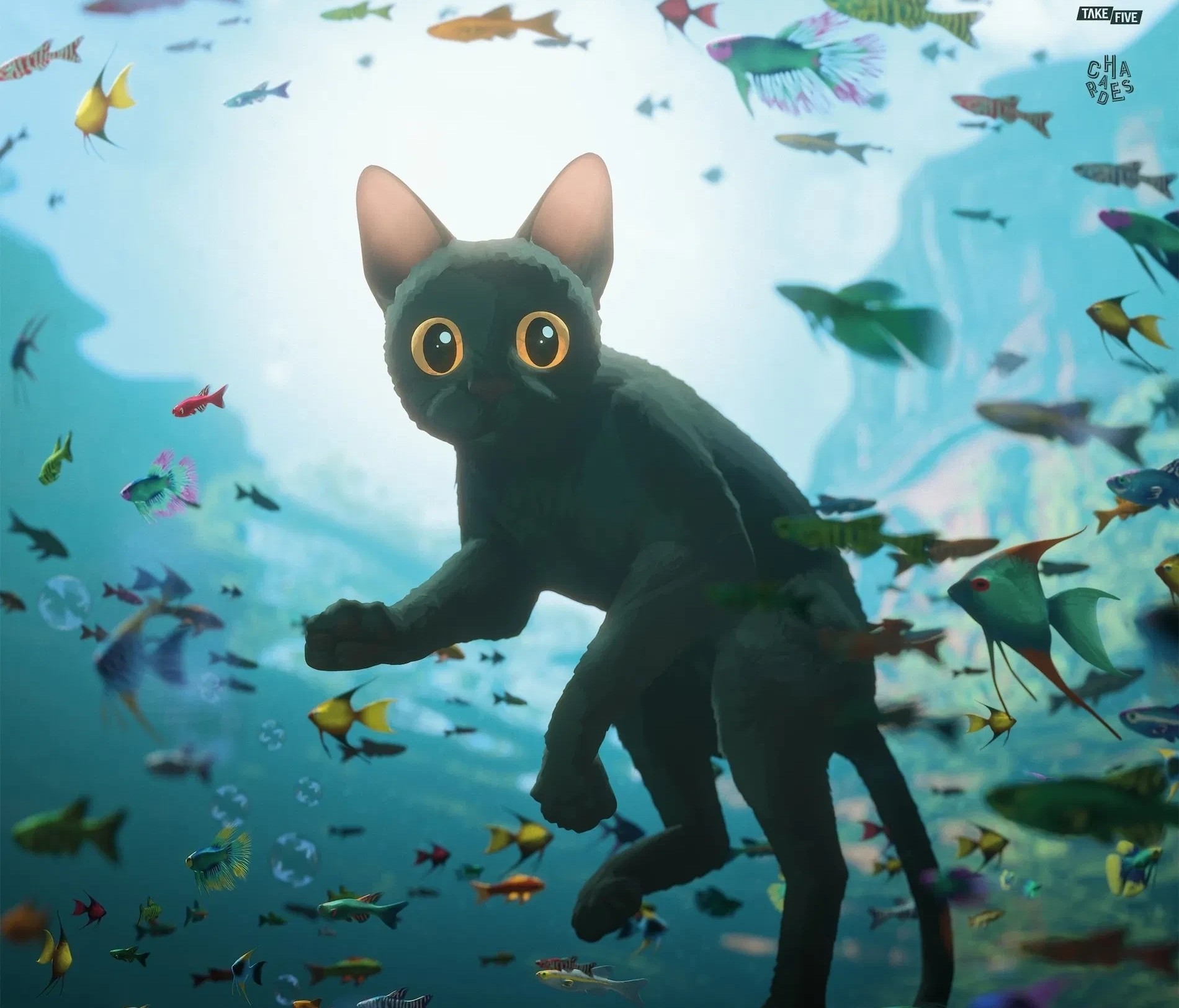
(Featured Image is the poster for Flow (2025) by Gints Zilbalodis, which is unrelated to this post but I just watched it yesterday and it is now one of my favourite films and I need everyone to know about it)
Discover more from Elizabeth Starr
Subscribe to get the latest posts sent to your email.

Published by
Leave a Reply