I haven’t had a lot going on at the moment, but I’ve been thinking about heroes. My latest draft of Becoming Sweetwood will be read in the next few weeks, hopefully before The London Book Fair on the 12-14 March. The London Book Fair is an annual publishing work-networking-business-deal conference thing, one of the biggest in the world. I’ve bought a ticket and am planning to go to a Disabled writers network. I went to all three days of the LBF last year just to see what it was like, so this year I’m only going to the first day. It was very, very big and busy, but I enjoyed the buzz, and will write about it more when I’ve been.
—
In the meantime, I’ve been trying to read widely with the attempt to educate myself more. I’ve been reading a 2021 book by Maria Tatar called The Heroine With 1,001 Faces, a response to Joseph Campbell’s hugely influential 1949 work on the hero’s journey The Hero With a Thousand Faces. I have quoted Tatar explaining Campbell’s work:
“Campbell begins his study of the hero with a thousand faces by laying out the concept of what he calls the “monomyth” (a term he borrows from James Joyce, the writer who was the subject of his doctoral dissertation and, tellingly, the author of Ulysses). For him, stories about heroes tap into a deep well of human creativity driven by the need to face down our fears about mortality. Every culture “spontaneously” fashions its own myths, but with a tight discipline that orders and controls the flow of the locally inflected story. “Why is mythology everywhere the same, beneath its varieties of costumes?” Campbell asked. The Lakota may call their trickster god Iktomi, but that deity does not operate all that differently from the West African Anansi, the Greek Hermes, or the Mesoamerican Quetzalcoatl. And whether we are listening to the chants of witch doctors in Congo, reading the sonnets of Lao-tzu, or catching the words of an Eskimo fairy tale, he added, the story never changes. Campbell enumerates what Christopher Vogler describes as the twelve building blocks used to create an interlocking edifice of story, an architecture that structures story with impressive uniformity even in the most remote corners of the world.”
– The Heroine with 1,001 Faces by Maria Tatar, pg. 18
These stages mapped out by Campbell form a blueprint that has been used by countless writers over the years, notably George Lucas when writing Star Wars, and they get talked about a lot in creative writing circles. Look the hero’s journey up if you’re interested! Campbell’s stages provide an easy formula to creating a satisfying story that will probably work well. You’ll probably recognise the story they tell:
1. Ordinary World
2. Call to Adventure
3. Refusal of the Call
4. Meeting with the Mentor
5. Crossing the Threshold
6. Test, Allies, and Enemies
7. The Approach
8. The Ordeal
9. Reward/Rebirth
10. Road Back
11. Resurrection
12. Return with the Elixir

These basic stages all have sub-sections and explanations that Campbell further expounds in his book. For Campbell, the elixir (which can be any kind of boon, including a woman) is the actual goal of the questing hero, but women also happen to be back home, waiting patiently for the hero’s return. The hero’s journey may still be talked about today, but Campbell’s views on women, maybe typical (or at least more common) in his time, are not. Marie Tatar analyses the dominance of his male-centric heroic ideal in her book, suggesting a different definition of hero.
“As Campbell explained to Maureen Murdock, author of The Heroine’s Journey (1990), “Women don’t need to make the journey. In the whole mythological tradition the woman is there. All she has to do is to realize that she’s the place that people are trying to get to.” “When a woman realizes what her wonderful character is,” he added in a way that can only produce exasperation today, “she’s not going to get messed up with the notion of being pseudo-male.” Campbell’s signature insouciant style-often winningly kindhearted-when talking about matters of far-reaching consequence can also mask an unconscious form of condescending misogyny. Women can never aspire to undertake the journey: reservations are restricted to men alone. Besides, who in the world wants to be a pseudo-male, whatever that may be?“
– The Heroine with 1,001 Faces by Maria Tatar, pg. 23
This feels to me like a call to redefine how we think of heroes, and how they are being presented to us in story. Does a hero have to be physically strong? How does a Disabled person be heroic?
—
The reason I’m telling you all this with little opinion is because I simply think it is interesting, and a way of storytelling that often springs to my mind when I’m watching a fantasy-adventure film. I’ll often recognise the plot beats and predict what will happen next. I started reading The Hero with a Thousand Faces for my MA, when one of my teachers put it as recommended reading, but I didn’t get further than the first chapter. I know the basic structure and that’s enough. Something I also look out for is what Tolkien calls a “eucatastrophe,” where a sudden change when all hope seems lost turns the events of the plot, and so the mood, from impending doom to hope. This is easily noticeable in children’s film, where the writers can get away with tried and tested formula, because their audience is too inexperienced to recognise the patterns in the stories they are being told(?) (Is this why the MCU is beginning to only appeal to children?).
I like it when I’m caught off-guard and the writers have veered away from stereotypical plot beats. I steered away from any plot-writing formula when writing Becoming Sweetwood, mainly because it’s based on memoir and because I was not going to write that kind of hero. Of course I did think about the emotional arc of the story, because that’s what a good story does. It pauses your life of constant ups and downs that never stops and gives you a nice beginning middle end story that someone has planned. You’re trusting the emotional arc they have chosen for you (It’s why watching a film is more emotionally tiring than watching TV, because you know a writer is really trying to make you feel something). In real life, you have to be your own hero, making your own choices and tending to your own feelings. With stories, you can relax and let someone else do that for you. The plot of your life doesn’t matter anymore. Maybe that’s why I read in absence of other things happening in my life.
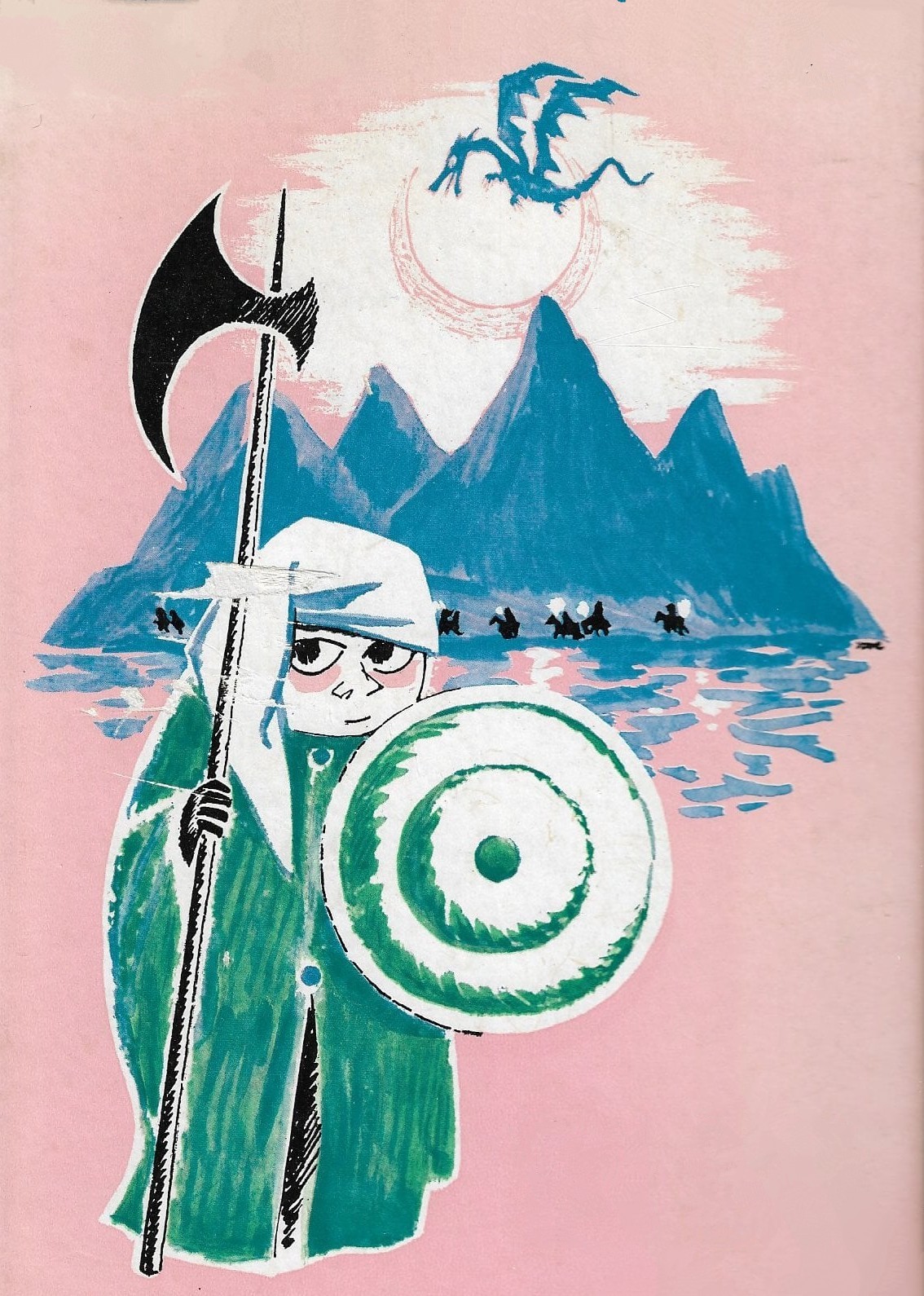
(Featured image is the front cover of the Swedish edition of Tolkien’s The Hobbit by Tove Jansson, 1962)

Leave a Reply