This week I asked my GP if a note on my medical record could be changed from ‘wheelchair-bound’ to ‘wheelchair-user.’ I’m a writer, I said, and think deeply about how language is used. Language subconsciously affects what we believe about ourselves and about others. Something I find really interesting is the words people choose to define and describe themselves, especially online. On a social media bio you suddenly have one sentence and a photo to describe yourself in. I’m always curious; what story is being told here? What story am I telling? How people identify in general is one thing but the stories a person tells about themselves when they’ve been through a life-changing disabling event is even more interesting to me, in how they choose to remember this. Do they define themselves by what they used to do, or what they have achieved? Are we bound to stories of the past or just using them?
I think a lot about the stories I present about myself. I’m aware that physical disability presents an instant host of visual cues, but with social media, you control the narrative. I remember back when I had my brain injury, I took clips throughout the year and created a rehab video of my progress and put it on YouTube, because everyone likes a satisfying feel-good upward-moving montage. I’ve since removed it because I have learned more about the experience of being Disabled, and am not comfortable with that overcoming-my-obstacles-wow-so-amazing narrative. I’ve decided not to make one of those then/now landmark social media posts. (This is not to say those are bad in any way! It’s just not me). I want to look forward to the me that is happening now, not the me that happened 5 years ago.
—
When people post about disability, how much are they aware of society’s and their own internalised attitudes to it? I’ve been reading a short book called Blind Spot: Exploring and Educating On Blindness by Maud Rowell, who talks about how blindness is set to increase in the UK, and how to react to this:
Those are some big numbers, and hiding behind them are real people, who upon going blind must take on the emotional weight of the negativity we all unconsciously internalise about disability. The way we think about blindness matters. We must all fight the mindset that sight loss makes us less than our sighted counterparts, because if we truly believe the blind cannot accomplish greatness, or have no social utility, or are not as good as those with sight, then we make those statements true. It’s a self-fulfilling prophecy that we all have the power to break.
– Blind Spot: Exploring and Educating On Blindness by Maud Rowell, pg. 10
You can swap out the word ‘blindness’ for any disability, the meaning would be the same. Rowell goes on to stress the very important point that myths about disability are internalised and perpetuated by ignorance and by invisibility. I am very lucky to have known disabled people living around me before I became Disabled, and have found role-models in person and online who have helped shape my understanding of what being me means. To quote Rowell, if I achieve anything it will be”not in spite of being disabled… But in spite of a disabling world and the disabling mindsets that still fill it.”
When I realised I wanted to write after I finished my BA, I knew I would never not be asked about my disability in relation to my writing. At that point I had only been Disabled for 2 years and was very aware that I had not grown up looking for disabled characters in story, because it hadn’t been something I identified with. By the time I finished my BA, I had seen a TV show with a character who looked like me and I gasped in excitement. So this is what representation feels like! Growing up as a white girl, seeing myself in stories hadn’t been uncommon. But now I was Disabled, I wanted to re-evaluate what was being told in stories about people like me. Doing an MA gave me an excuse to read and think about disabled characters and how they were represented, and I learned about theories on disability like Robert McRuer’s crip theory and Alison Kafer’s crip time. The word ‘crip‘ still makes me uncomfortable but I’m really grateful I got a chance to read about it academically, and will know more about my Disabled identity when I am asked.
—
The hashtags #criplit and #kidscriplit are used to label and sort book lists, and I’m very aware if I ever get published my work will be tagged like this.”Cripple” is one of those words to describe disability that would never be acceptable nowadays (except in the Bible??), but there are people who still use it to describe themselves and others. Cripple is a very ancient word that has become derogatory and is used hatefully (and casually, I don’t I need to explain the uses of this word), but many Disabled people use the word cripple as a reclaimed positive identity. Many still don’t, because of the violent history of abuse the word brings with it.
I think I think about the meaning and history of words too much to ever fully be comfortable with the word crip, but I also understand it, and the importance of reclaiming an identity. Our identity is in the words we say. I am ready I to identify as a “Disabled writer.” All the same, I’d rather just stick with ‘writer.’ Whatever the case, I’m bound to hear every use of every identifying label under the sun. I’m glad I’m prepared. Most of all, I’m glad that whilst some doctors still use outdated language in their notes, even they have stopped using the word “cripple.”
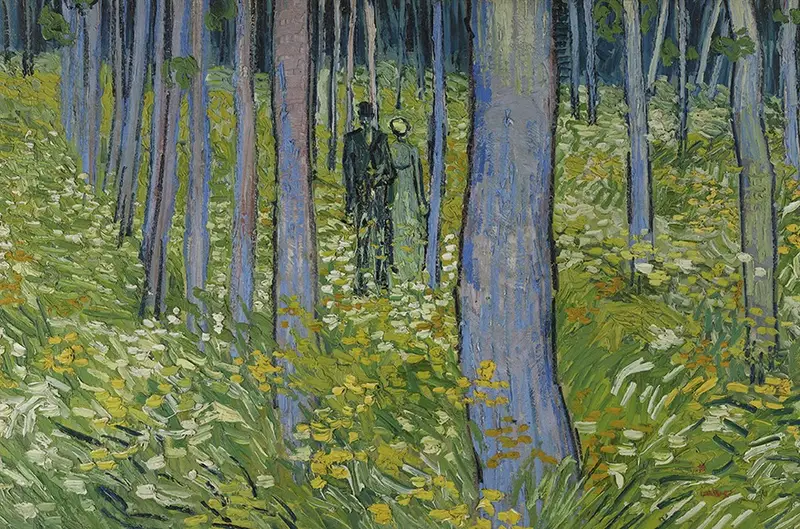
(Featured image is “Kreupelhout met twee figuren” by Vincent van Gogh, 1890)
Discover more from Liz Starr
Subscribe to get the latest posts sent to your email.

Published by
2 responses to “8. Bound To Happen”
-
I wonder who took the picture of you? 👀
No but really this is a fantastic thought piece about the word cripple. Personally, I would never use it – I think the connotations are too negative for me. However, I see why and how people could reclaim it because they’re trying to erase the previous history.
Also the note about being a wheelchair user vs wheelchair bound is a subtle distinction but the first offers freedom whilst the second almost confines you. I’m glad you asked the doctor to change it!
This is such an insightful piece!
-
Following on from Tejal’s comment- Did the GP agree with you? Apparently now you can read your medical notes on your phone via an NHS app, so notes are more accountable than they used to be. It is interesting how words have different levels of ‘power’ in different hands. ‘Crip’ can only be used non-offensively by disabled people, and I guess is used ‘offensively’ to ‘slap people round the face’ to wake them up. In the similar way LQBGT+ people embrace ‘queer’ (and LGBGT+} as a concept to do a similar thing.


Leave a Reply