As I sit here to write after coming home from the library, bumping over rough pavements and cracked roads, I am thinking about language. I was going to write a blog post about the literary agent I’ve been talking to but I think I’ll save that for another day. In the library, I was reading a book where a person responds to trauma and an aching nostalgia for the natural landscape being destroyed around them by starting to learn their people’s native language. I wish I could do this. I’ve always found the idea of learning to speak your own language very powerful and evocative. I’ve always been interested in the native languages of Britain, but I am very English. I don’t have another language I can feasibility claim. I’ve joined a minority group in becoming Disabled but have no minority language to claim with it. English is my native tongue, so I guess all I can do is learn more about it.
And yet, being a wheelchair-user living in the middle of South London worries me that I’m losing parts of my language. Living in cities feels a lot safer to me than in the countryside as here there are more eyes to see me if anything goes wrong. The good thing about living around lots of people is that there’s always a random stranger on hand to help if something goes wrong (when the bus ramp doesn’t work, when my wheels get stuck, if I need a push. Of course, I’d rather not be assisted and mostly everyone can tell I’m okay and ignores me, unless I actually look in danger. I find most people these days totally believe in my independence). But I can’t help but feel cut off from nature. And when I do find somewhere green/forested to go, access is usually quite bad. Paths are muddy and root-covered, plus you get no satisfaction of the body-heat/satisfaction that comes from a brisk walk. If I ever go into a patch of woods alone, I am always hyper aware that I might get stuck in the mud with no one to help me. Recently, I ended up going along a footpath by a deserted canal. What should have been a pleasant stroll was instead an anxious ten minutes as I tried not to slip off the path into the water with no one to witness my death. Another time I went into some woods and got stuck in the mud. Luckily a man came along and pushed me out.
I still risk it because the will-I-make-it-or-not daring kind of life is kind of fun. But I don’t get a chance to go into the woods very often and I feel that all the hard work I put in as a child to learn the words of the natural world is being undone. On family walks, you would see me running up and down constantly asking adults what the names of the wildflowers and trees were. Now, because I don’t get a chance to get near to wildflowers, I’m afraid I’ll forget their names. I’ve started writing them down when I see them to help me remember.
—
When I was in the Neuro Rehab Unit in hospital in Leicester, the ward’s labels were marked with the name ‘NRU’ but some of them had the faded letters ‘YDU’ underneath. When I asked what that meant I was told they stood for the ward’s old name, the ‘Young Disabled Unit.’ I was shocked; thank goodness they changed it, YDU was an awful name. Especially as ‘young’ meant anyone who wasn’t in a geriatric ward, so was a huge age range, everyone who wasn’t a child. Some staff had worked in the YDU and later, when I was staying in the rehab/care home I met a man who had been a patient there. Years later, I’ve read about YDUs, which were a thing in hospitals nationwide. To my horror, until about the 1960s, if you became disabled enough in this country you had no choice but to go and live in the YDU FOREVER. Stories about hospitals in the 20th century and what they did to disabled people gives me chills. Institutionalisation in hospitals was the norm and the only option (for anyone who wasn’t rich) because there was no care in the community and society had zero access. I don’t think I need to explain why this is awful. I read Judy Hunt’s history of disability in the UK in No Limits: The Disabled People’s Movement with baited breath; people have been campaigning since the 1970s for disabled people me to be able to live a normal life and the first time disability discrimination was acknowledged legally was in 1995! Drop-kerbs and ramps are relatively recent! The 2010 Equality Act was only passed within my lifetime! Public transport only had to be accessible since then! I could go on, but you get the idea; learning about my rights and history as a Disabled person has been so impactful to me, and information is so hard to find. YDU won’t come up if you try and internet search it, which is typical. The legacy of how disability was treated in this country is still hard to find out about. They certainly didn’t tell me anything in NRU. I really liked the BBC Documentary Silenced: The Hidden Story of Disabled Britain, and love the work of UK Disability History Month , but there’s so much that we who weren’t there never get told. Maybe this is the new language to learn? The name ‘YDU’ has left a faded imprint in my mind, and I think of the people who had no choice but to live in institutions. Some still do. That could have been me.
—
So I find it hard to actually go into the forest, and I find the idea of institutionalisation horrifying. So what do I do with this? Well, write. I’ve been told the idea for Becoming Sweetwood is very original, but my first draft could be so much better. So I’m editing, but also reading. I’ve been reading a mix of fiction and non-fiction about nature and disability. Memoir and fantasy. Learning. I’ve also been exploring the area I live in and discovering little patches of woodland. Who knew that South London would be spotted with little clumps of trees? It’s not wildflowers, but at least it’s something.

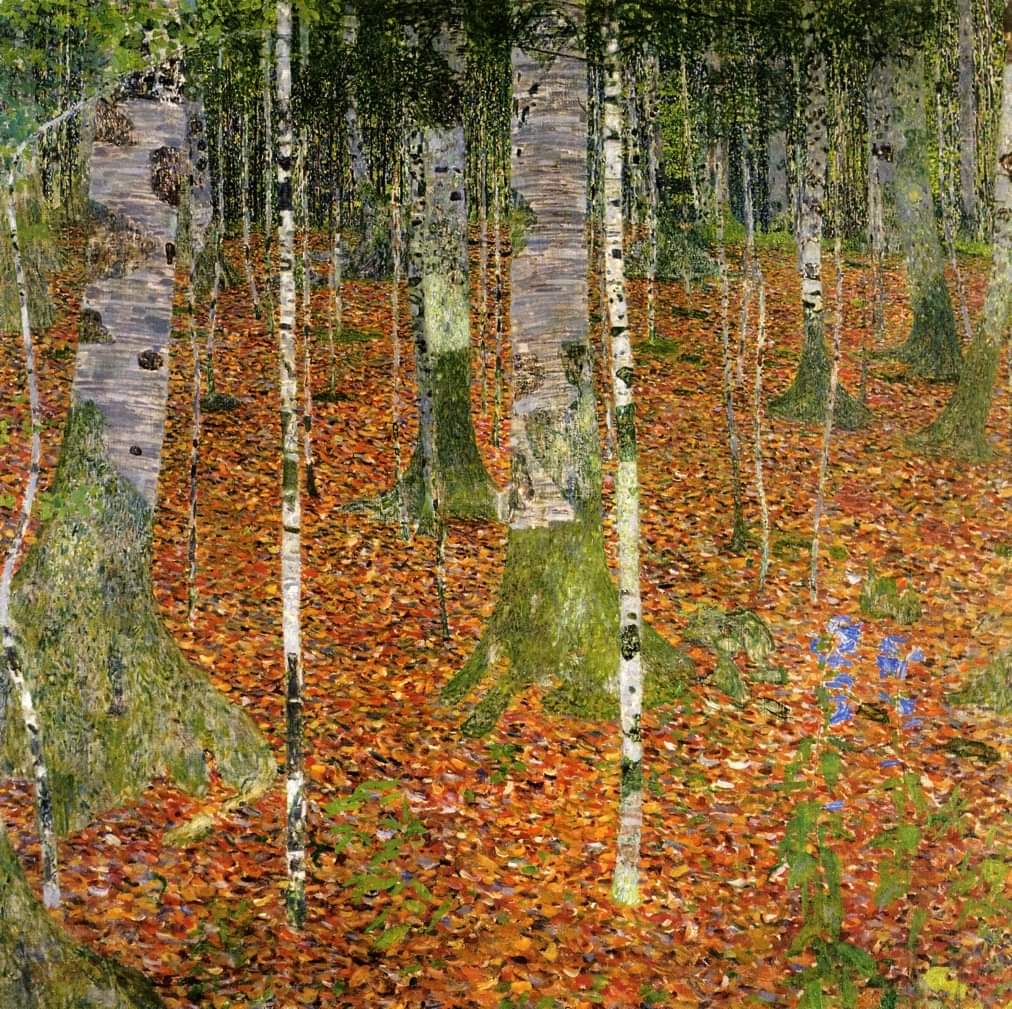
(Featured image is Gustav Klimt’s 1903 ‘Birch Forest’)


Leave a Reply