I’ve finished putting together Alice in Wheelchairland! I’ve been editing my cover letter and writing a chapter breakdown as I went, so I prepared along the way, something I didn’t do with the last book I wrote. I put the document together and sent the pitch to James Catchpole for his initial reaction. I have no expectations about The Catchpole Agency representing my work, so I haven’t tried to polish the story too much, as I don’t see the point in doing this when I haven’t even had editorial advice yet. Doing the work for the agency as a Reader last year has really helped me know how to write a cover letter and layout my work, which has been really helpful this time round.
—
Yesterday I went with a friend to watch Disney’s Mufasa: The Lion King (2024). As a person who’s main interest is children’s animated film, I tried to weigh up my reaction professionally. I’ve seen so many children’s films at this point I couldn’t help but notice how the plot was similar to Disney’s Dinosaur (2000). I guess there are only so many plots and Disney has produced a lot of films. I personally don’t love the CGI animation of this one, but I know that I have to judge the film on what it sets out to do. Despite knowing this, I still didn’t think the writing was the best it could be. I wrote my undergraduate English Literature dissertation comparing the gender of animal companions in Disney versus Studio Ghibli films, so it’s something I’ve been interesting in for a long time, way before I started using a wheelchair and became interested in disability (which isn’t a theme in this film).
I used to watch and pause my Disney VHRs so that I could catch the lyrics of the songs and write them down in my notebook to sing with my sister. We used to sit in one bed and sing before sleeping. So even though adult me didn’t particularly love or hate the music in Mufasa: The Lion King, maybe child me would have still sung the songs? I don’t know, I like to think I would have been outraged by Disney’s blatant money-grab film-making, but let’s face it, a child is a child and I wasn’t always this knowledgeable about how films are made. In child me’s defence , I did grow up in the Disney Renaissance of the ’90s, when Disney was making good original films and hadn’t yet started this live-action remake trend of a cop-out on original story-telling. I won’t analyse Mufasa: The Lion King now, save that for an in-person conversation, but it got me thinking again about the purpose of children’s story. Do we set out trying to say something; teach or entertain.
Art is art, but capitalism is capitalism. It all comes down to money. Writers and directors can be as aspirational as they want, but the project will only go ahead if the funders say so. A big conservative company like Disney does not like to take risks, and executive committees who greenlight projects base their decisions on numbers and gamble on commercial success (I’m aware that I haven’t actually worked in the film industry, so I might just be making cynical pretentious assumptions?).
Mufasa: The Lion King‘s plot is a story within a story: Simba’s daughter Kiara is being told a story about her grandfather Mufasa whilst her parents are away. At the end of the film she learns they were away because her brother was being born. As a Lion King fan, I already knew Simba’s daughter was called Kiara and there is already a movie about her (The Lion King II: Simba’s Pride, 1998), and that his son is called Kion and there is already a completed Disney Junior show about him (The Lion Guard, 2015-2019). So this film was not really creating any new lore, it was just signposting to more Disney content. There is already so much unofficial backstory written about The Lion King in past comics and stories, but does anyone really care?
Does Disney care if they colonise childhood? They’re aiming their content at the majority of the population who aren’t writers, but even someone who’s not invested in all of the stories around The Lion King can still tell a good story when they see it. And anyone can spot economic motives. The Lion King is such a successful franchise for Disney I’d be surprised if they didn’t make more content (then again, they might not, because Mufasa: The Lion King has not been a huge commercial success).
—
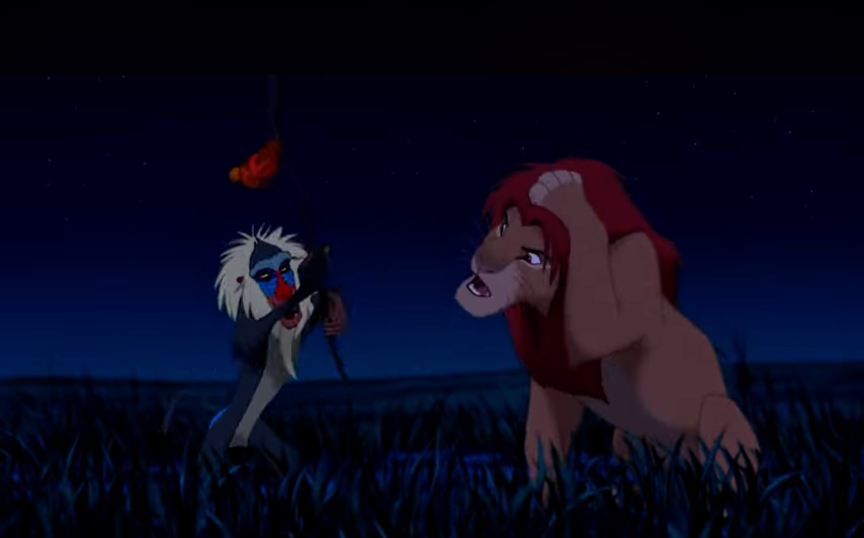
Because I know how much power producers have in funding stories, I haven’t thrown too much at mine yet. Writers may only be able to produce work when assisted by others, but good writing stays with children into adulthood, and that’s what I keep in mind. When I was very young, I used to watch The Lion King in my head to get to sleep, I knew the script so well. I think I internalised the message about learning from your past and not hiding from your responsibilities. I love the story of running away from your guilt and responsibility, only to remember who you are and run home.
I think the best stories are shiny concepts that convince the adults that it will sell, with impactful messages that are remembered. I have no idea if children will remember what I write, but I think a lot about the message I’m trying to say.
.
.
.
(Featured Image is a screencap of “the past can hurt” scene in The Lion King, (1994))
Discover more from Elizabeth Starr
Subscribe to get the latest posts sent to your email.

Published by
Categories: Uncategorized
Leave a Reply